
Cities Launch SBIR Matching Grant Programs
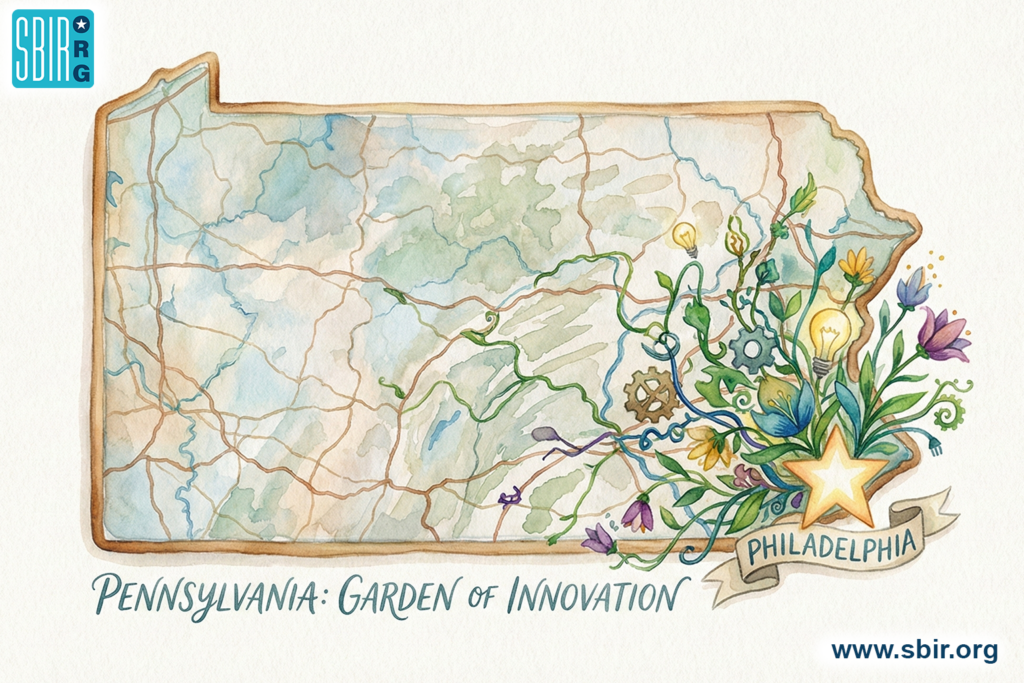
PHILADELPHIA – January 12, 2026 — With America’s flagship small-business innovation program caught in congressional limbo, local governments are increasingly taking matters into their own hands.
In Philadelphia, officials have launched what is being hailed as Pennsylvania’s first city-led SBIR matching grant initiative, aimed at bridging the gap between lab-bench breakthroughs and viable products(**). This month, the city’s Department of Commerce awarded a total of $450,000 in matching grants to 21 local life-science startups that had previously won federal SBIR or Small Business Technology Transfer (STTR) grants. The support comes in the form of in-kind commercialization services – up to $20,000 for Phase I SBIR winners and $50,000 for Phase II winners – tailored to each company’s needs. The University City Science Center, a nonprofit hub for entrepreneurship, is administering the program and working directly with each startup to deploy the funds on activities like market research, regulatory consulting and patent strategy. The goal is to accelerate these companies’ progress toward real-world applications, even as federal dollars are momentarily out of reach.
City leaders say the move is a strategic investment in Philadelphia’s burgeoning biotech sector, which has been a growing driver of the local economy. “These companies are advancing therapeutic discoveries, developing new technologies, and creating skills-based job opportunities for Philadelphians,” the Commerce Department noted in announcing the grants. By bolstering homegrown firms in fields from gene therapy to robotics, officials hope to lay groundwork for long-term growth, scientific advancement and improved patient outcomes. The matching funds are explicitly focused on turning research insights into products.
Philadelphia is not alone. In the absence of new federal SBIR money, a patchwork of state and local programs has emerged in recent years to amplify the impact of the federal grants. More than 20 states – from Alabama and Indiana to Tennessee and New Jersey – now offer some form of SBIR matching grants, signaling a widespread commitment to nurture innovation economies(**). These initiatives typically match a portion of a company’s federal award (often 50%, up to a set cap) to help push innovations further toward market. “State matching funds…symbolize a state’s commitment to nurturing innovation and supporting the local economy,” notes one industry analysis, adding that such programs provide critical financial ballast beyond what federal Phase I or II grants alone can offer. The additional capital is often directed toward expenses the federal awards won’t cover – business planning, patent costs, customer outreach – which are nonetheless vital to a young company’s success(**)(**).
The track record from states that pioneered these efforts suggests a strong return on investment. North Carolina’s One NC Small Business program, launched in the mid-2000s, offers $50,000 matches to SBIR Phase I winners. An evaluation found that over its first 10 funding cycles the program deployed $17.2 million to about 250 small businesses, helping create or retain more than 900 high-tech jobs and generating an estimated $5.6 million in state tax revenue(**). Those grants often served as a springboard: roughly 60% of the awardees went on to win the much larger Phase II SBIR/STTR awards at the federal level. Perhaps more impressively, companies boosted by the North Carolina fund have attracted over $514 million in follow-on investments from venture capital and other sources – nearly 30 times the state’s initial outlay. (And that figure was tallied before one Durham gene-editing startup, a former grantee, landed an additional $110 million financing in 2018.)
Kentucky tells a similar success story. The Bluegrass State’s SBIR/STTR Matching Funds program, begun in 2006, has been nationally recognized for seeding high-growth startups. As of February 2025, Kentucky companies have leveraged the state match to secure about $4.78 in federal or private capital for every $1 of state grant money(**). Those businesses have created more than 760 well-paying jobs – 88% of them exceeding $50,000 in annual salary – and have produced 235 patents along the way. All told, Kentucky has made 337 matching awards to 153 companies, which in turn have generated over $108 million in sales and licensing revenue and drawn $166 million in federal SBIR grants into the state’s economy. Governor Andy Beshear touts the program as a way to “ensure Kentucky remains competitive in the innovation and technology sectors” by investing in startups that create high-wage jobs for locals. Entrepreneurs, too, credit the matching funds with filling critical gaps. “Federal funding is largely limited to technical development,” noted Tim Fogarty, founder of a Kentucky hydrogen technology venture, emphasizing that winning an SBIR is only half the battle. “To achieve commercial success, customer engagement and business development is required. Funding for those activities can be difficult to come by” – and that’s where the state match proved invaluable.
Even at the municipal level, a few forward-thinking cities have launched their own innovation boosts. San Antonio, for example, piloted a SBIR/STTR Matching Grant Program in 2023 to support local tech firms that had secured federal awards. The city offered supplementary grants to research-focused small businesses “with high potential for commercial viability,” aiming to help them establish new markets and spur growth in the region(**). While such city-led programs remain relatively rare, Philadelphia’s initiative – proudly billed as the only one of its kind in Pennsylvania – could inspire other large cities to follow suit if it proves successful.
Why are local governments so keen to pour scarce dollars into what might seem like niche R&D projects? The answer, officials say, is the outsized economic payoff they can yield. Studies have shown that SBIR-backed startups tend to punch above their weight in growth: winning an SBIR grant doubles a company’s likelihood of subsequently attracting venture capital, and is associated with significant increases in revenue, employment and longer-term survival(**). In effect, these public awards help de-risk nascent technologies enough for private investors to climb aboard – a classic case of public investment crowding in private capital. By augmenting the federal funds, state and city programs aim to further accelerate that trajectory. “When the SBIR program gives out money, the innovation outputs created by recipients are only a small part of the overall effect,” wrote economist Matt Clancy in a recent analysis, noting that spillover benefits – new ideas and spinoffs sparked in the surrounding economy – can be even larger than the direct impact on the grant-winning firms themselves. In North Carolina, for instance, every state dollar invested has so far yielded roughly $30 in follow-on capital and countless ripple effects in the biotech ecosystem(**). The message: a modest public investment in high-potential startups can translate into robust local growth.
There is also a defensive logic at play. Regions worry that without adequate support, their brightest entrepreneurs will decamp to bigger tech hubs or wherever funding is more plentiful. Matching grants often come with strings attached to anchor companies locally. New York’s new Innovation Matching Grants program, for example, requires awardees to remain headquartered in-state for at least two years after commercializing their product – or else repay the grant(**). The hope is to prevent a scenario where a company uses public funds to develop a breakthrough, only to relocate and generate jobs elsewhere. By investing early and tying support to local operations, cities and states strive to capture the downstream benefits of the innovations they help foster.For now, as Congress deliberates on renewing the SBIR/STTR program, stopgap measures like Philadelphia’s offer a welcome dose of optimism to innovators. They demonstrate how subnational governments can innovate in their own right – not with laboratories, but with creative policy – to sustain the momentum of discovery. “These programs bridge groundbreaking research and market success, enabling small businesses to reach new heights in their innovation journey,” says a report from Grant Engine, a consultancy that tracks SBIR funding(**). In other words, they’re not just writing checks; they’re sending a signal. Innovation won’t wait. If federal support is stalled, then cities and states will invest in their entrepreneurs themselves, confident that the returns – in jobs, industries and intellectual capital – will be well worth the gamble. As Philadelphia’s experiment gets underway, all eyes in the startup community will be watching to see if local initiative can indeed keep the innovation flame lit until Washington catches up.