
Genzyme: $62K Grant to $20B Biotech Giant
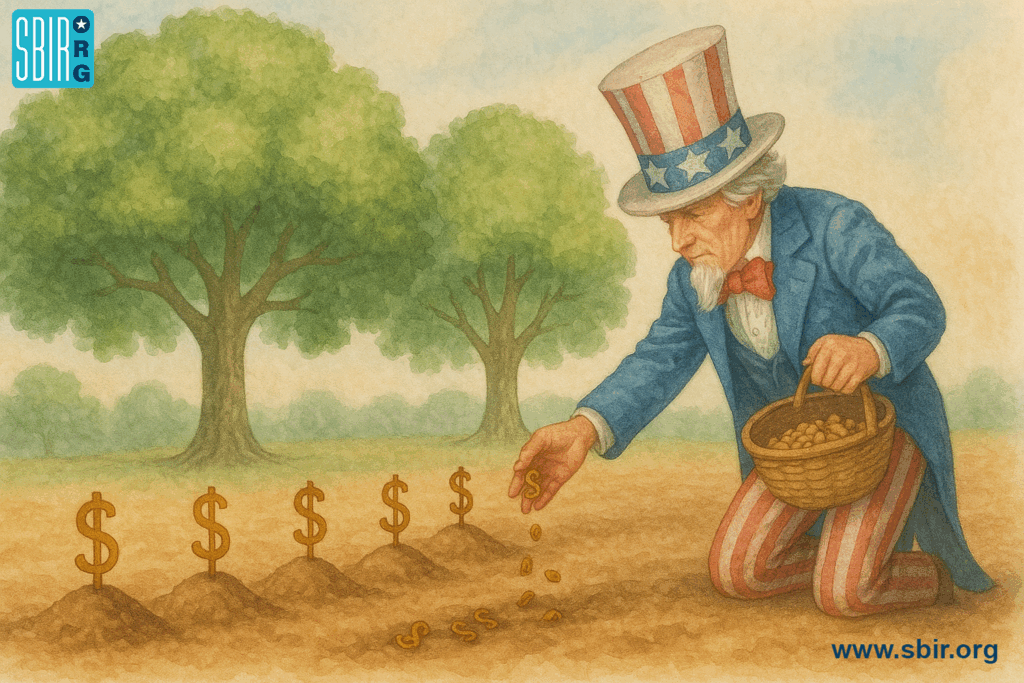
In 1983, a tiny biotechnology startup operating out of a former clothing warehouse in Boston received an unlikely lifeline from the U.S. government: a $62,000 grant. At the time, the company – named Genzyme – had only a handful of employees and was co-founded by a young research technician from Tufts University and a serial entrepreneur with no prior biotech experience(**). The grant came from the federal Small Business Innovation Research (SBIR) program and was intended to help Genzyme develop methods for large-scale enzyme purification, an esoteric project with seemingly limited commercial appeal. Nobody could have predicted that this modest taxpayer-funded investment would lay the foundation for one of biotech’s great success stories – culminating nearly three decades later in Genzyme’s $20.1 billion acquisition by pharmaceutical giant Sanofi. That staggering price tag represents roughly a 324,000-fold return on the initial public investment, a milestone that has turned Genzyme into a legend in tech-transfer circles.
Humble Origins Fueled by Public Funding
Genzyme’s early focus was on rare genetic diseases – ailments so uncommon that private investors in the early 1980s showed little interest in funding therapies. Company co-founder Henry E. Blair had been working on an experimental enzyme treatment for Gaucher’s disease (a rare, inherited disorder) under government contracts at Tufts Medical School(**). “Before the Orphan Drug Act, investors’ eyes would roll back in their heads when I said there were maybe 4,000 patients” nationwide who might need the treatment, Mr. Blair recalled, referring to the tiny market for Gaucher’s at the time. In this climate, federal SBIR grants proved critical. The SBIR program – created by Congress in 1982 to spur innovation at small firms – provided non-dilutive capital, meaning companies like Genzyme did not have to give up any equity or ownership in exchange for government funding. This structure allowed Genzyme to pursue high-risk, high-reward research that venture capitalists balked at, without surrendering control of its science. The first $62,000 SBIR grant from HHS (awarded shortly after Genzyme’s founding) enabled the fledgling team to scale up enzyme production methods. Additional SBIR awards followed – seven in Genzyme’s first decade – delivering over $1 million in early R&D support that kept the lab’s lights on and its research moving forward.
Those public investments quickly paid scientific dividends. Working closely with researchers at the National Institutes of Health, Genzyme’s scientists helped refine an enzyme replacement therapy for Gaucher’s disease(**). By 1991, the company won FDA approval for its first drug, Ceredase, the first effective treatment for Gaucher’s disease(**). It was a breakthrough moment: a once-untreatable and potentially fatal genetic illness now had a therapy, offering hope to patients who had felt “forgotten and powerless,” as longtime Genzyme CEO Henri Termeer later described. That hope, however, came at a steep price – literally. Ceredase was, at the time, the most expensive drug in the world, costing around $200,000 per patient per year. (The company explained the eye-popping price by noting the drug’s complexity – early production required processing enzyme from 22,000 human placentas to treat a single patient for one year.) Genzyme’s willingness to tackle ultra-rare diseases, combined with incentives from the Orphan Drug Act of 1983 (which granted companies market exclusivity and tax credits for rare-disease therapies), proved that money could be made in serving small patient populations. In fact, Genzyme became the first company to show that developing drugs for “orphan” diseases could be financially viable(**). The firm reinvested its revenues into more acquisitions and research, expanding into treatments for disorders like Fabry disease, thyroid cancer, and multiple sclerosis over the ensuing decades.
From Five Employees to Global Leader
As its portfolio grew, so did Genzyme’s footprint. What began with just five employees in a makeshift office blossomed into a biotechnology powerhouse. By 2010, the Cambridge-based company had over 11,000 employees worldwide, making it the world’s third-largest biotech company at that time. It operated manufacturing plants and labs across 17 countries and sold its therapies in nearly 90 nations. Genzyme’s annual revenues reached into the billions of dollars – $3.8 billion in 2007 and about $4.1 billion by 2010 – driven largely by its pioneering enzyme replacement therapies and other drugs for rare conditions. In recognition of its impact, President George W. Bush awarded Genzyme the National Medal of Technology and Innovation in 2005 “for pioneering dramatic improvements in the health of thousands of patients with rare diseases and harnessing the promise of biotechnology to develop innovative therapies”. It was a remarkable validation of Genzyme’s mission: the once-skeptical notion of focusing on “forgotten” diseases had not only delivered life-changing medicines, but also built a thriving business.
Through these years of growth, the U.S. government’s early role in Genzyme’s success was often held up as a model. The SBIR program, in particular, provided the “seed corn” for companies like Genzyme to bridge the gap between academic discovery and commercial product(**)(**). A report by the Information Technology and Innovation Foundation notes that many groundbreaking life science startups got their start with SBIR support – and Genzyme is a prime example. Indeed, a study of federal seed funding found that 75% of entrepreneurs believed their project “probably or definitely would not have proceeded” without SBIR backing. Genzyme’s trajectory seems to affirm that: its early SBIR grants made possible a project that almost certainly would not have attracted private capital in 1983. By the time venture investors and big pharma took notice, Genzyme had already achieved proof of concept with government help, illustrating SBIR’s role in taking risks the private sector won’t.
A $20 Billion Windfall – But Where’s the Taxpayer’s Cut?
In February 2011, Genzyme’s journey from scrappy startup to biotech juggernaut reached its climax. After months of courting, France’s Sanofi-Aventis (now Sanofi) agreed to acquire Genzyme for $20.1 billion in cash, plus future payments tied to certain drug approvals. It was one of the largest deals in biotech history – second only to Roche’s purchase of Genentech – and a testament to Genzyme’s value. “Genzyme was the first company to show that money could be made by making drugs for diseases with small patient populations,” Sanofi’s CEO Christopher Viehbacher said at the time, emphasizing how Genzyme built a “new platform in rare diseases” that Sanofi was eager to tap. For Genzyme’s shareholders and executives, the sale was a bonanza. Longtime CEO Henri Termeer, who had led the company for 28 years, departed with a legacy sealed (and a substantial personal payout), and investors reaped the rewards of years of growth and innovation.
The 324,000x return on that original $62,000 SBIR grant – while a useful measure of Genzyme’s phenomenal growth – did not mean Uncle Sam pocketed a share of the $20.1 billion. SBIR grants are just that, grants – not equity investments – so the government held no ownership stake in Genzyme to cash out. In essence, federal agencies like NIH and HHS act as early-stage sponsors, not profit-seeking investors. So how did taxpayers benefit? Policymakers point out several returns on this public investment:
- New Treatments and Health Benefits: Genzyme’s therapies have saved or improved thousands of lives. Patients with Gaucher’s, Fabry, Pompe disease and other rare illnesses – who previously had no options – gained effective treatments thanks in part to that initial government-supported research. The societal benefit of curing or managing life-threatening diseases, while hard to quantify in dollars, is a core goal of public health funding. As evidenced by Genzyme’s National Medal citation, the company’s work “dramatically improved” patient outcomes in diseases that were long neglected.
- Economic Growth and Jobs: Over the years, Genzyme created high-paying jobs and a ripple of economic activity. The company’s growth built an entire biotech campus in Cambridge, MA, and supported a global workforce of scientists, technicians, and manufacturing staff. These jobs, largely U.S.-based, contributed to local economies and tax bases. In fact, studies of the SBIR program have found that it more than pays for itself in tax revenue: one Congressional report noted that federal, state and local governments ultimately collected over $3 in taxes for every $1 spent on SBIR projects, thanks to the successful businesses and jobs that result. Genzyme’s rise – from startup to a $4 billion/year enterprise – exemplified this multiplier effect, generating taxable income at a scale far beyond the initial grant.
- Scientific and Technological Advancements: The knowledge generated by Genzyme’s research has seeded further innovation. The company’s success in enzyme replacement therapy paved the way for an entire industry focused on rare disorders. Competitors and new startups followed in Genzyme’s footsteps, often building on techniques and science that emerged from Genzyme (much of it traceable to NIH-funded research in the 1970s and ’80s). This kind of knowledge spillover is another way the public investment paid dividends: Genzyme’s SBIR-funded breakthroughs didn’t just create one company’s products – they helped launch a field that continues to grow, to the benefit of patients and the economy.
Legacy of a 30-Year Bet
Today, more than a decade after the Sanofi takeover, Genzyme (now folded into Sanofi’s operations) remains a leading name in rare disease therapies. Its legacy, however, is larger than any single company. Genzyme demonstrated that a bold idea – backed early on by public funds – could create not only a lucrative business, but also an entirely new model of drug development. What started as a $62,000 SBIR experiment showed that investing in high-risk biomedical research can yield outsized returns for society, even if those returns are measured in cures and economic growth rather than direct paybacks to the U.S. Treasury.
In an era when public investment in science is often scrutinized, Genzyme’s story stands as a powerful case study. “The SBIR program clearly provides a big bang for the federal R&D dollar,” a National Academies review concluded, calling it an “unmatched economic growth engine” for innovations exactly like Genzyme’s. At the same time, the case also fuels ongoing discussion about how to ensure the public shares in the financial upside of the breakthroughs it helps underwrite. Some experts have floated ideas like equity stakes or royalties for government in certain grants, or reinvestment of sale proceeds into new research. For now, programs like SBIR continue to operate as they have for over 40 years – seeding nascent ideas with public money, and trusting that the benefits will return to the public indirectly.As for that little Boston startup in 1983, its journey from $62K grant to $20B buyout remains a beacon for scientists and entrepreneurs to dream big. “By attacking the most difficult cases,” Mr. Termeer once said of Genzyme’s focus on rare diseases, “we were able to provide new hope”. It was hope paid for in part by taxpayers, realized by dedicated researchers, and ultimately transformed into tangible medicines and economic value. And in that journey lies a lesson: a modest public investment, in the right hands, can grow into something that benefits the entire world.