
From NASA Algae to Baby Formula: Martek’s Rise
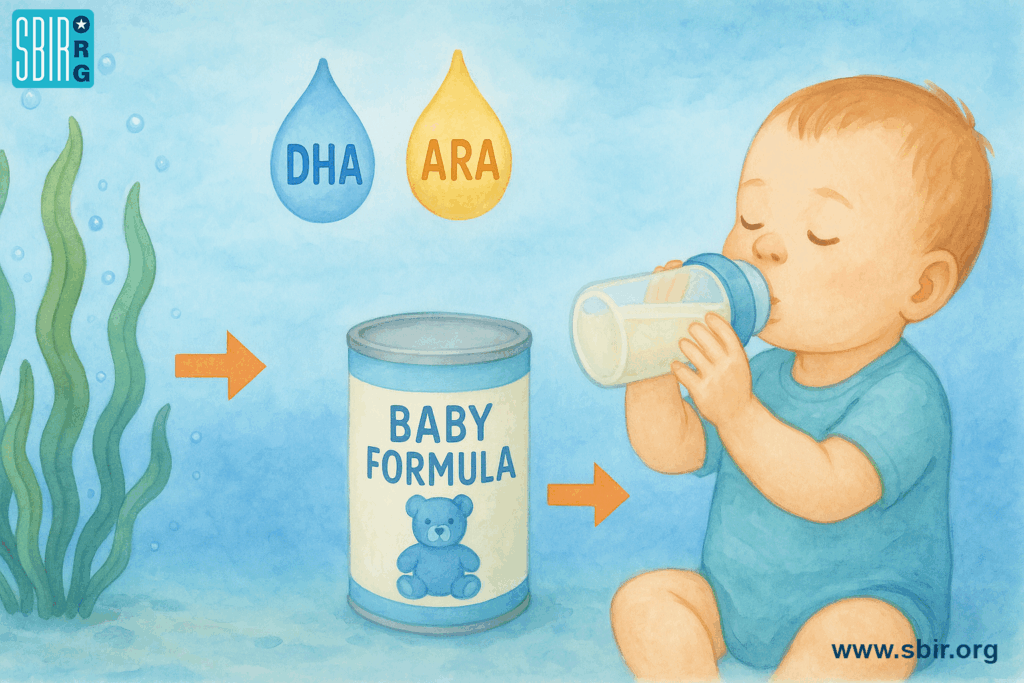
It is hard to imagine a connection between planetary spaceflight research and the bottle of infant formula on a kitchen counter. Yet a discovery from a 1980s NASA life-support experiment has quietly revolutionized infant nutrition, adding critical nutrients to nearly every baby formula in America(**)(**). This unlikely tale of innovation—spanning from algae studies for astronauts to the diets of over 50 million babies on Earth—highlights how a small biotech company, Martek Biosciences, turned a space-age idea into a public health windfall(**).
In 1985, a team of scientists working for Martin Marietta, a major aerospace contractor, decided to strike out on their own. They had been investigating the use of algae for NASA’s Closed Environment Life Support System (CELSS) program – an initiative to use living plants and microbes to recycle air and produce food on long-duration space missions(**). During that research, the scientists realized that certain microscopic algae were a virtually untapped resource with remarkable nutritional potential. “Driven by their passion for their discoveries,” as Martek’s official history puts it, the visionary group spun off from Martin Marietta and founded Martek Biosciences in Columbia, Maryland. They took with them a collection of algae strains – and an ambitious idea that these humble organisms might benefit human health back on Earth.
The newly formed company soon hit scientific pay dirt. Martek’s researchers identified a strain of marine microalgae, Crypthecodinium cohnii, that naturally produces large amounts of docosahexaenoic acid, better known as DHA. DHA is an omega-3 fatty acid that plays a key role in brain and eye development, especially in infants(**). They also discovered they could obtain another crucial nutrient – arachidonic acid (ARA), an omega-6 fatty acid – by fermenting a soil fungus called Mortierella alpina. Both DHA and ARA are predominant in the gray matter of the human brain and in the retina of the eye, making up a significant portion of these organs’ fatty structure(**). In fact, about 60% of the brain is composed of fat, and DHA and ARA are among the most abundant fatty acids in the brain’s architecture. These compounds are also found naturally in human breast milk and are believed to be essential for infants’ cognitive and visual development. However, before Martek’s innovation, infant formulas contained none of these breast milk fatty acids – a nutritional gap that many researchers suspected could put formula-fed babies at a developmental disadvantage.
Armed with its algae and fungal sources of DHA and ARA, Martek began developing an additive for infant formula. The small start-up faced a daunting road: it would ultimately take 17 years for Martek to earn its first dollar of profit. In the meantime, funding had to come from somewhere. The company found a lifeline in the federal Small Business Innovation Research (SBIR) program, which provides competitive grants to innovative small companies. “I doubt if Martek would be here without [SBIR grants],” said Henry “Pete” Linsert, Martek’s longtime chief executive. For its first eight years, SBIR awards – almost 40 of them from agencies including the Department of Defense, the Department of Energy, the National Institutes of Health and others – became Martek’s primary source of research and development funds. These grants not only kept the lights on but also, as Martek executives later noted, “validated our technology, gave us credibility, and opened doors” for further investment. By 1992, Martek’s persistence paid off with its first licensing deal: infant-formula makers agreed to incorporate the company’s algae-derived DHA and fungal ARA (branded as “life’sDHA” and “life’sARA”) into their products. Martek had, in effect, created a nutritional supplement called Formulaid® – an oil blend rich in DHA and ARA – that could be added to formula to more closely mimic the profile of mother’s milk.
Scientific authorities were quick to take interest. Research into DHA and ARA supplementation for infants was mounting in the 1990s, and early studies found that adding these fats conferred notable benefits. In randomized trials, babies who received DHA-enriched formula showed improved visual acuity and slightly higher cognitive scores compared to those fed formula without it. “Infants who are fed formula with DHA show an IQ that is six to seven points higher than infants fed formula without DHA, and they also develop better eyesight,” Linsert reported, citing double-blind studies. Other researchers agreed that the effect was meaningful, especially for babies born prematurely, who miss out on some of the crucial DHA and ARA transfer from mother to fetus in late pregnancy. By the mid-1990s, two major nutritional authorities – the British Nutrition Foundation and a joint World Health Organization/Food and Agriculture Organization expert committee – had officially endorsed adding DHA and ARA to infant formula (for both preterm and full-term infants) and even recommended these nutrients for mothers during pregnancy and nursing. Such endorsements reflected a growing consensus that these fatty acids are “essential building blocks” for infant brain and eye development.
Still, bringing Martek’s discovery to American consumers took time. European formula manufacturers moved faster: in 1994, companies like Nutricia in the Netherlands began blending Martek’s Formulaid into formulas for premature babies, later expanding to all infant formulas sold in parts of Europe. In the United States, regulatory approval lagged behind. The Food and Drug Administration did not greenlight DHA and ARA for U.S. infant formulas until the early 2000s, making the U.S. one of the last developed markets to permit these additives. Once approval came, however, adoption was swift. By 2006, over 90% of infant formula sold in the U.S. was fortified with DHA and ARA. Martek, which had gone public in 1993 amid high hopes for its patented nutrients, scaled up production to meet surging demand. The algae and fungal oils are produced via fermentation in sprawling industrial facilities – a far cry from the lab flasks of the 1980s. By 2010, Martek’s revenues neared $300 million annually, and it employed over 500 people. In 2011, the Dutch nutrition conglomerate Royal DSM acquired Martek for over $1 billion, but the core business of supplying DHA and ARA to infant formula continued unabated under the new ownership(**).
Today the impact of Martek’s innovation is difficult to overstate. Almost every infant formula in the United States – about 99% of brands – contains the company’s algae-derived DHA and fungal ARA additives. These nutrients have been consumed by an estimated 50 million infants in the U.S. alone, giving generations of babies a nutritional boost that more closely resembles the benefits of breastfeeding. “If you go to any shopping mall in the U.S. and look at a child under the age of five, chances are the molecules we’ve made in our fermentation factories are in the brands he eats,” Peter Buzzi, Martek’s chief financial officer, quipped in an interview. The same is true for roughly 40% of infants worldwide, he added, thanks to the spread of Martek’s nutrients to formulas in over 65 countries. In practical terms, this means millions of parents across the globe have been scooping powdered formula fortified with algae-origin omega oils – often without realizing the space-age origin of the ingredients listed on the can. Those ingredients are helping babies “develop healthy brains, eyes and hearts,” as NASA notes when touting the project as one of its notable spinoff technologies.
What began as an experiment in sustaining astronauts has thus blossomed into a boon for public health on Earth. Pediatricians today routinely recommend DHA-fortified formulas, especially if breastfeeding is not possible, and many prenatal vitamins for expectant mothers now include DHA as well. Beyond infant formula, Martek’s discovery has trickled into the broader food supply. The company’s life’sDHA® oil is added to products like milk, yogurt, eggs, and cereals to enrich them with omega-3s, capitalizing on consumer interest in the potential brain and heart benefits for adults. Walk down a supermarket aisle and you may notice “DHA-fortified” orange juice or breads – a direct, if unheralded, legacy of that algae research for the space program decades ago.
Martek’s journey from a NASA contractor’s lab to the grocery store shelf has not gone unnoticed by innovation experts. The company has been honored as an “SBIR Hall of Fame” inductee for its extraordinary success born from federal research grants. Advocates of public R&D funding often point to Martek as a shining example of how government-supported science can yield widespread societal benefits – in this case, better nourished babies and healthier futures. “We don’t cure cancer,” Buzzi once remarked, “but we’ve impacted probably more people than any biotechnology company ever”. It’s a bold claim, but when one considers the millions of children worldwide who have grown up with a little extra boost in their bottles, courtesy of an algae scientist’s “aha!” moment, it doesn’t sound far-fetched. From spaceflight research to your kitchen, the story of Martek’s formula additive is a reminder that innovation can travel in unexpected orbits – and that even a small, tinkering startup can end up touching millions of lives for the better.